I am a political philosopher seeking to address contemporary social challenges. My work explores the use of philosophical tools to assess the role of technology in shaping our future, to navigate political disagreements, and to secure justice for marginalized populations. My research draws on political philosophy, political epistemology, and interdisciplinary research of emerging technologies to find avenues for making progress on the real-world injustices, inequalities, and threats to democracy that impact societies today.

Political Epistemology event at Georgetown
Political Philosophy & Political Epistemology
My political philosophy and political epistemology research seeks to demonstrate how Rawlsian political liberalism can help us navigate contemporary challenges. This approach diverges from most dominant interpretations of Rawls’s Political Liberalism that have turned increasingly inward, towards narrow debates that arise internal to liberal theory and an idealized well-ordered society. By contrast, I argue Rawls’s approach to navigating deep political disagreements while securing a just, stable, and legitimate government can help us navigate the contemporary challenges our society faces.
I have three related projects in this area. The first project, growing out of my dissertation, develops a Rawlsian approach for securing equality and justice for marginalized populations. The second project seeks to develop foundational work in the newly emerging subfield of political epistemology, which investigates questions at the intersection of truth, knowledge, and politics. The third project aims to develop mutual respect across deep moral and political disagreements characterizing society, while tackling contemporary challenges like polarization and misinformation.
Ethics and Political Philosophy of Technology
My research in the ethics and political philosophy of technology seeks to contribute meaningfully to interdisciplinary conversations about how technology shapes our future. I engage directly with the computer scientists and theorists who are shaping technology policy and with research and policy teams seeking to build ethics directly into their work. As such, I have targeted my publications in this area toward the top-tier venues followed by this audience.
I have also worked directly with computer scientists, research, and policy teams grappling with questions at the intersection of ethics and computer science. Currently, I am a senior researcher on a grant with computer scientists and lawyers investigating ways to intervene in the existing data ecosystem to better protect individual’s rights through collective interventions aimed at better securing privacy, security, fairness, and justice.
My research demonstrates how a philosophical approach to challenges of privacy, consent, fairness, and justice can offer new insights to make tangible progress in the technical and policy realms. I also argue that considering classic questions of philosophy in the context of the digital realm generates new theoretical insights. One project investigates how consent operates in the digital sphere. A second project investigates what makes an algorithm or AI system just.
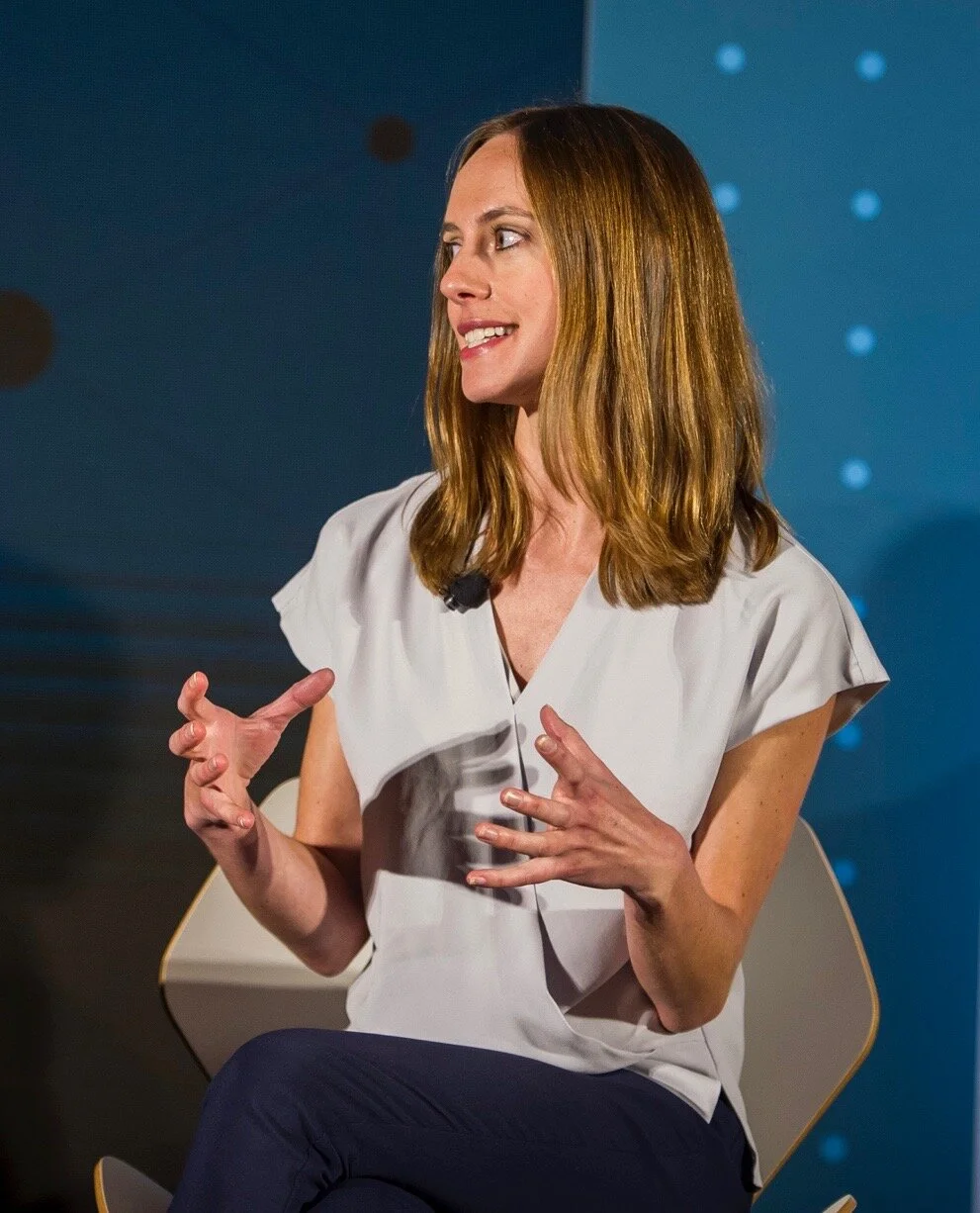
Speaking at Politico’s AI Summit

Ethics of Data Sharing Workshop
Impact Projects & Collaborations
I served as Senior Ethicist at Georgetown’s Ethics Lab, where I was responsible for developing translational ethics methodologies to empower students and experts to address the urgent issues of our time. These methods seek to bring ethics into complex contemporary issues in ways that facilitate productive interdisciplinary collaborations.
I was responsible for leading Ethics Lab’s grant projects in collaboration with policy and research teams. In the fall of 2019, funded by a grant from the Sloan Foundation, I designed and led a convening of an interdisciplinary group of experts in ethics, technology, law, and policy to examine ethical issues that arise in sharing administrative data across public and private sectors. The resulting white paper can be found here.
I also developed a workshop series on “Ethics in AI for Future Policymakers,” funded by a grant from the Public Interest Technology University Network. This series seeks to help a cohort of technology policy fellows from Tech Congress, AAAS, and Georgetown’s Center for Security and Emerging Technology work with the rapidly evolving ethical challenges they confront in advising on AI policy during their placements in various governmental agencies and Congress.
Previously, I led Ethics Lab’s partnerships with the Inter-American Development’s Fair Artificial Intelligence Project, Harvard’s Privacy Tools Project, and the Smithsonian Institutes.
Quisque iaculis facilisis lacinia. Mauris euismod pellentesque tellus sit amet mollis.